
01
Store. Persistent memory
Keep every conversation, file, tool call, and decision in one durable context layer


InterfaceKit gives coding agents code-level references from products that set the standard, so they can build UI worthy of your idea.
People recognize AI-generated apps immediately. Before they understand what makes your product different, familiar patterns can make an original idea feel interchangeable with everything else.
People have seen the same layouts, components, and visual tricks too many times before.
A distinctive product can feel interchangeable when its interface resembles everything around it.
Visitors decide whether the product deserves attention before they discover what makes it valuable.
Models reproduce the patterns they encounter most. Different prompts keep converging on the same familiar layouts, components, and visual language.
Inspiration images show AI the surface, not the system behind it: component boundaries, states, responsive rules, interaction logic, and code.
Without the decisions underneath the screen, an agent has to invent the structure—and falls back to the same average patterns again.
Give the agent the typography, spacing, color, border, and layout rules that keep every screen visually coherent.
Provide real building blocks together with the active, empty, loading, error, and responsive states that explain how they behave.
Keep navigation, hierarchy, actions, and transitions connected so the agent understands more than an isolated screen.
Turn the interface into implementation context the agent can inspect, reuse, and adapt directly inside the product.
InterfaceKit gives your agent a better starting point than the patterns everyone else is using. Shape the system around your product and ship an interface with a point of view.
Start with specific, proven product thinking instead of the familiar patterns every model reaches for by default.
Adapt the hierarchy, components, interactions, and visual language until the system belongs to your product.
Ship a coherent interface people can recognize, remember, and separate from the flood of AI-made apps.
Choose a kit and download its complete interface reference as a single file. That is the entire setup.
Add the file to Claude, Codex, or any other coding agent as context—no plugin, integration, or new workflow required.
Your agent can immediately use the foundations, components, states, pages, flows, and code available through the file.
The file connects your agent to the complete interface system without another tool, integration, or round of setup.
The foundational tokens and decisions behind each interface.
Focused building blocks reconstructed from real product behavior.
Full screens that preserve hierarchy, density, and responsive intent.
The loading, empty, active, error, and transition states users actually encounter.
Structured references that coding agents can inspect and use during implementation.
Layouts designed to remain coherent across desktop, tablet, and mobile.
A consistent way to find kits, components, patterns, and pages.
Clear source relationships and examples for adapting the system.
The connections that turn individual UI pieces into a complete experience.
When the UI feels deliberate, people can see the value of the product instead of seeing the shortcuts used to build it.
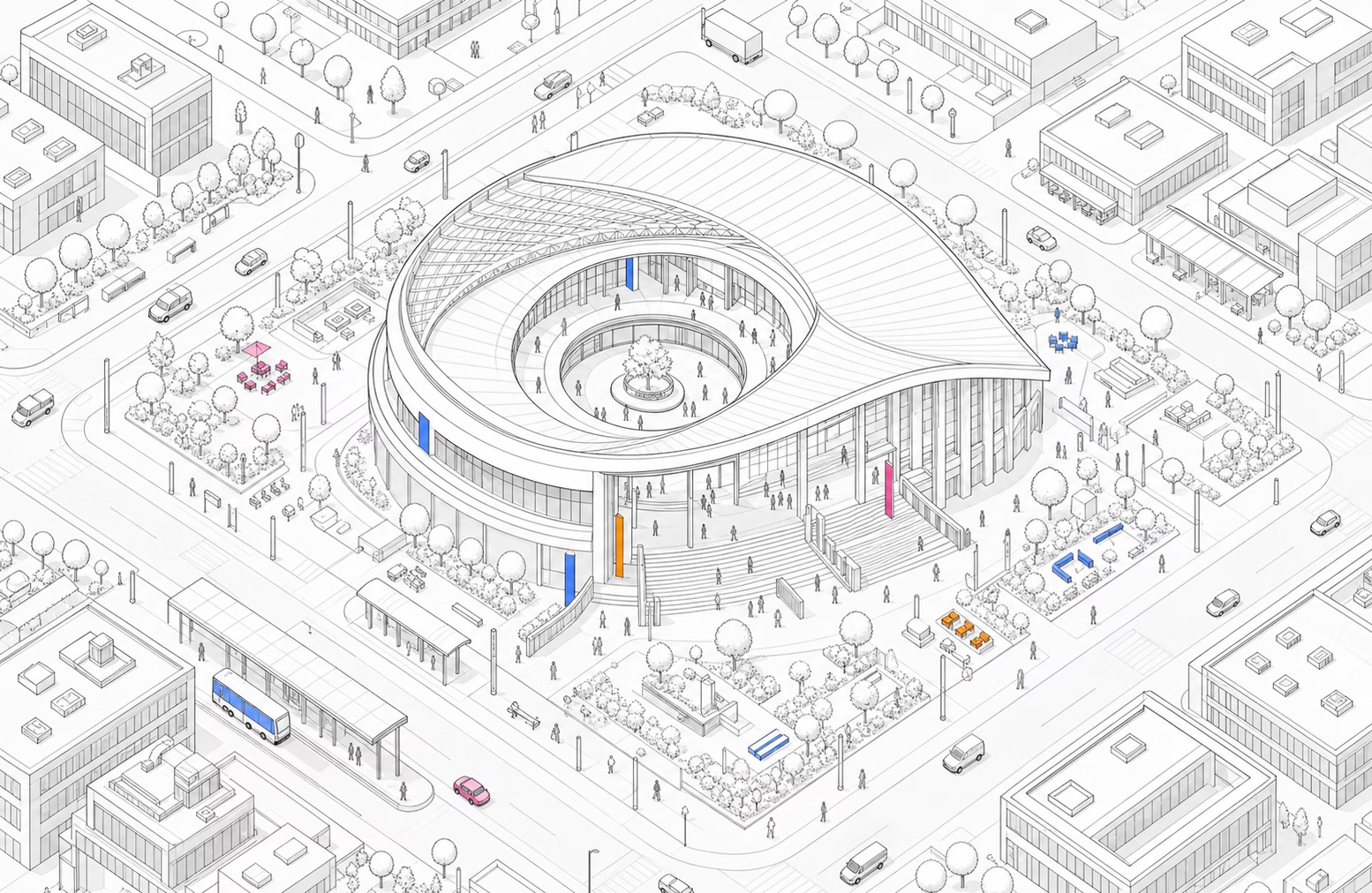
A coherent, polished interface makes the product feel credible before a visitor understands everything happening underneath.
Clear hierarchy and thoughtful interaction help people understand what the product does and why it is worth their attention.
Use a stronger interface foundation without copying another brand, then shape it around what makes the product yours.
Give your agent structured interface references from products that set the standard, then turn them into something unmistakably yours.